
Gastric Ulcers or Hindgut Issues? Understanding the Overlap
When it comes to digestive health in horses, gastric ulcers are often the first concern that comes to mind. Most owners have heard of Equine Gastric Ulcer Syndrome (EGUS), and many have dealt with it first-hand.
But there’s another equally important piece of the puzzle — the hindgut.
The challenge?
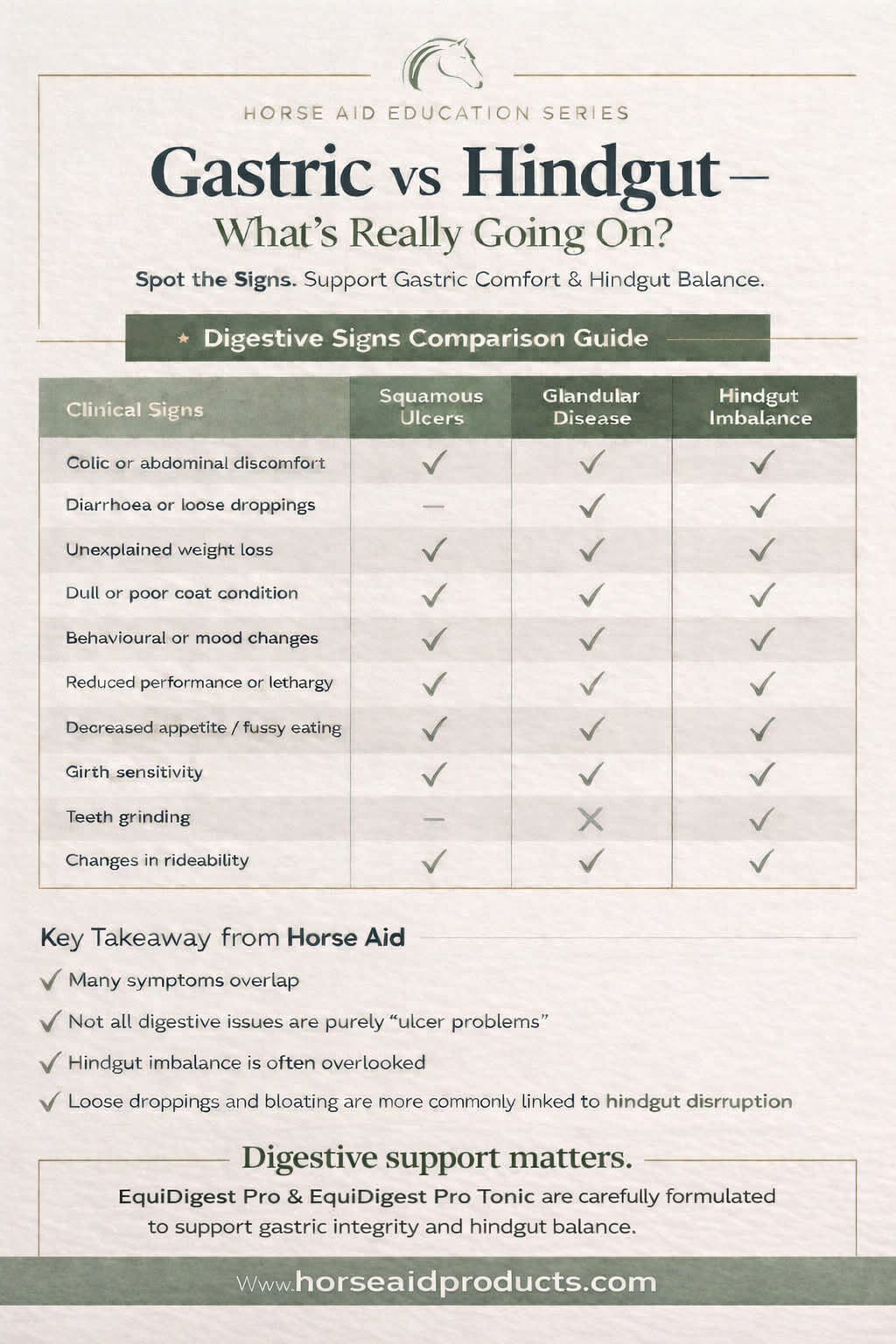
The symptoms of gastric ulcers and hindgut disorders can look remarkably similar, making it difficult to identify what’s really going on without proper investigation.
Why the Signs Can Be Confusing
Both gastric ulcers and hindgut disturbances may present with:
Poor appetite
Weight loss
Dull coat
Behavioural changes or irritability
Reduced performance
Because the signs overlap so significantly, it’s easy to assume ulcers are the sole cause — when in fact the hindgut may be involved, or both areas may require support.
This is why veterinary assessment is always essential if your horse is showing ongoing or worsening symptoms.
Gastric Ulcers – The Condition We Hear About Most
Gastric ulcers include both squamous ulcers and glandular gastric disease, and together they fall under the umbrella of EGUS.
These painful lesions affect the stomach lining and are particularly common in horses experiencing:
Stress
Intensive training
Frequent travel
High concentrate feeding regimes
Limited forage access
While the signs are well recognised, they are not exclusive to ulcers — which is where hindgut conditions are sometimes overlooked.
Hindgut Disease – The Often Missed Factor
The hindgut (large intestine and colon) plays a critical role in fibre fermentation, nutrient absorption and immune function. When this area becomes compromised, a range of conditions may develop.
Colonic Ulcers
Ulceration within the large intestine can mirror stomach ulcers, presenting as weight loss, appetite changes and behavioural shifts.
Right Dorsal Colitis
Often associated with prolonged NSAID use, this inflammatory condition of the colon may cause weight loss, diarrhoea and recurrent colic symptoms.
Colitis
Inflammation of the colon due to infection, stress, medication or dietary changes. Signs may include diarrhoea, dehydration and abdominal discomfort.
Impaction
A blockage within the large intestine, commonly linked with dehydration or insufficient fibre intake. This can lead to reduced droppings, appetite loss and colic.
Irritable Bowel–Type Disorders
Chronic bowel irritation may present as intermittent diarrhoea, gas, discomfort or inconsistent droppings. Contributing factors can include stress, diet and microbiome disruption.
Hindgut Acidosis
Occurs when excess starch and sugars reach the hindgut and are rapidly fermented. This process produces lactic acid, lowering pH levels and potentially damaging the intestinal lining.
Dysbiosis
A disruption in the balance of beneficial gut bacteria. Because the hindgut houses a complex microbial population essential for digestion and immune regulation, imbalance can have widespread consequences.
Unlike gastric ulcers, hindgut conditions may more commonly present with loose droppings or diarrhoea — though not always.
Why pH Balance Matters
Faecal pH can provide useful insight into hindgut health.
Grazing horses typically show a faecal pH of 6.4–6.7
A pH between 6.0–6.4 may suggest subclinical acidosis
Values below 6.0 are associated with severe acidosis and osmotic diarrhoea
Performance horses on high-starch diets are particularly vulnerable. Rapid fermentation of carbohydrates encourages lactic acid–producing bacteria, reducing beneficial short-chain fatty acids (SCFAs), which are vital for gut integrity and overall nutrition.
As lactic acid levels rise and pH drops, horses may show:
Weight loss
Reduced appetite
Poor condition
Behavioural changes
Inconsistent performance
However, this isn’t only a competition horse issue.
Leisure horses can also be affected — particularly when introduced to lush pasture. Fructans in fresh grass may bypass small intestinal digestion and ferment within the large intestine, potentially disrupting the microbiome in susceptible horses.
The Bigger Picture: Supporting the Whole Digestive System
Not every digestive issue is purely a stomach ulcer problem.
The hindgut plays an equally important role, and both regions should be considered when supporting your horse’s digestive health.
A balanced microbiome, stable pH and a protected gut lining are essential whether your horse is:
In training
Recovering from stress
Adjusting to pasture changes
Travelling
Or simply needing ongoing digestive maintenance
Real Results for Horses with Digestive Sensitivity
When digestive function improves, changes are often visible beyond the gut.
Owners commonly aim to support:
 More consistent, well-formed droppings Reduced signs of digestive discomfort Improved appetite in fussy feeders Better body condition Greater comfort during work A calmer, more settled demeanour
Digestive imbalance doesn’t just affect the stomach — it can influence behaviour, performance, coat quality and overall wellbeing.
Supporting both the gastric environment and the hindgut microbiome creates a stronger foundation for lasting balance.
Why EquiDigest Pro Is Structured Differently
EquiDigest Pro – Advanced Gut & Gastric Support is formulated to work throughout the digestive tract rather than targeting a single area.
It includes a triple pre-probiotic complex alongside ingredients selected to support gastric comfort and hindgut stability.
Key Functional Ingredients
Pre-Probiotic Complex
Supports beneficial gut bacteria and encourages microbial balance.
Slippery Elm & Marshmallow Root
Traditionally used to help soothe and protect the digestive lining.
Sea Buckthorn
Rich in bioactive compounds that help maintain gastric mucosal integrity.
Liquorice Root
Recognised for supporting digestive resilience.
L-Glutamine
Plays a role in maintaining gut lining integrity.
Magnesium Oxide & Calcium Carbonate
Help maintain normal gastric acidity levels.
Together, these ingredients are designed to support:
Stomach lining integrity
Normal gastric pH balance
Digestive efficiency
Hindgut microbial stability
Overall digestive comfort
The Added Support of EquiDigest Pro Tonic
EquiDigest Pro Tonic provides complementary liquid digestive support.
Aloe vera is valued for its soothing properties within the digestive tract. When used alongside the powder, the tonic supports:
Digestive comfort
Gut lining integrity
A balanced digestive environment
The combination allows structured support for both gastric and hindgut function as part of a comprehensive digestive management plan.
A Supportive — Not Substitute — Approach
Digestive disorders should always be assessed and diagnosed by a veterinarian.
EquiDigest Pro and EquiDigest Pro Tonic are designed to support digestive health alongside:
Appropriate veterinary guidance
Adequate fibre intake
Controlled starch levels
Thoughtful pasture management
Stress reduction strategies
Supporting the Whole Horse
Digestive health is not just about preventing ulcers.
It’s about:
Microbiome balance
pH stability
Lining integrity
Nutrient absorption
Long-term resilience
Because when the gut functions properly, everything else tends to follow.
Information provided for educational purposes and should not replace veterinary diagnosis.