Common Questions and Answers About Equine Sarcoids
Equine sarcoids are a complex and often concerning issue for horse owners. These skin tumors are relatively common but can vary greatly in terms of appearance and behavior. This variability can leave owners with numerous questions and uncertainties. Understanding what equine sarcoids are and how to manage them with appropriate treatments can help ensure your horse receives the best care possible. In this post, we address some of the most frequently asked questions about equine sarcoids and explore how natural remedies like Horse Aid Cream, Sarc Diamond, and Hedgerow Immunity Plus can support your horse’s healing journey.
1. What Exactly Are Equine Sarcoids?
Equine sarcoids are benign (non-cancerous) skin tumors that can develop in horses, ponies, and donkeys. These growths may appear as flat lesions, warty lumps, or more fleshy, ulcerated sores. They are commonly found around the head, face, and legs. Although the precise cause is not entirely understood, these tumors are believed to be triggered by the bovine papillomavirus (BPV). Sarcoids can differ significantly in size and behavior, from small, barely noticeable lesions to large, aggressive growths.
2. What Are the Different Types of Sarcoids?
Sarcoids come in different forms, each with its own characteristics and treatment considerations:
Occult Sarcoids: These are flat, hairless patches of skin that often appear in the early stages. They tend to be localized and may not be as aggressive.
Verrucous Sarcoids: These growths are wart-like, raised, and usually have a dry, scaly appearance. They often appear around the head and neck.
Nodular Sarcoids: These are firm, round lumps that can vary in size. They often feel like small, hard balls under the skin.
Fibroblastic Sarcoids: These are fleshy, ulcerated growths that can be more aggressive, and they are often found on the legs, face, or genital areas.
Mixed Sarcoids: These are a combination of different types of sarcoids. They may show both verrucous and fibroblastic characteristics.
3. What Are the Treatment Options for Equine Sarcoids?
There are several traditional treatment options for managing sarcoids, each with its own pros and cons. The best approach depends on the type, location, and behavior of the sarcoid.
Surgical Removal
Pros: Can be highly effective for localized sarcoids, with the potential for complete removal.
Cons: Recurrence is common, especially if all sarcoid tissue isn’t fully excised. The procedure requires anesthesia and has a longer recovery time.
Cryotherapy (Freezing)
Pros: An effective method for treating verrucous and some nodular sarcoids. It’s a relatively quick procedure.
Cons: This method can cause inflammation and discomfort. It also has a risk of recurrence, as it may not completely eliminate all of the tumor tissue.
Laser Therapy
Pros: Provides precise treatment for smaller sarcoids. It also helps with quicker recovery compared to surgery.
Cons: May not be effective for larger or deeper sarcoids. It also requires specialized equipment and expertise.
Topical Treatments
Pros: Non-invasive and can be applied directly to the sarcoid. Horse Aid Cream is a great option for providing natural support to the healing process.
Additional Benefit: Horse Aid Cream is designed to soothe, moisturize, and regenerate skin, making it an ideal choice for horses with sarcoids. It can support the healing process and enhance comfort, making it a gentle but effective treatment option for managing sarcoids and promoting skin health.
Radiation and Chemotherapy
Pros: Can be effective for more aggressive or recurrent sarcoids.
Cons: These treatments are invasive, costly, and may require multiple sessions. They also come with a higher risk of side effects, including skin damage.
4. How Can Natural Treatments Support Sarcoid Healing?
For those looking for a gentler approach, natural remedies can be highly beneficial when used in conjunction with conventional treatments. Products like Horse Aid Cream, Sarc Diamond, and Hedgerow Immunity Plus offer significant benefits.
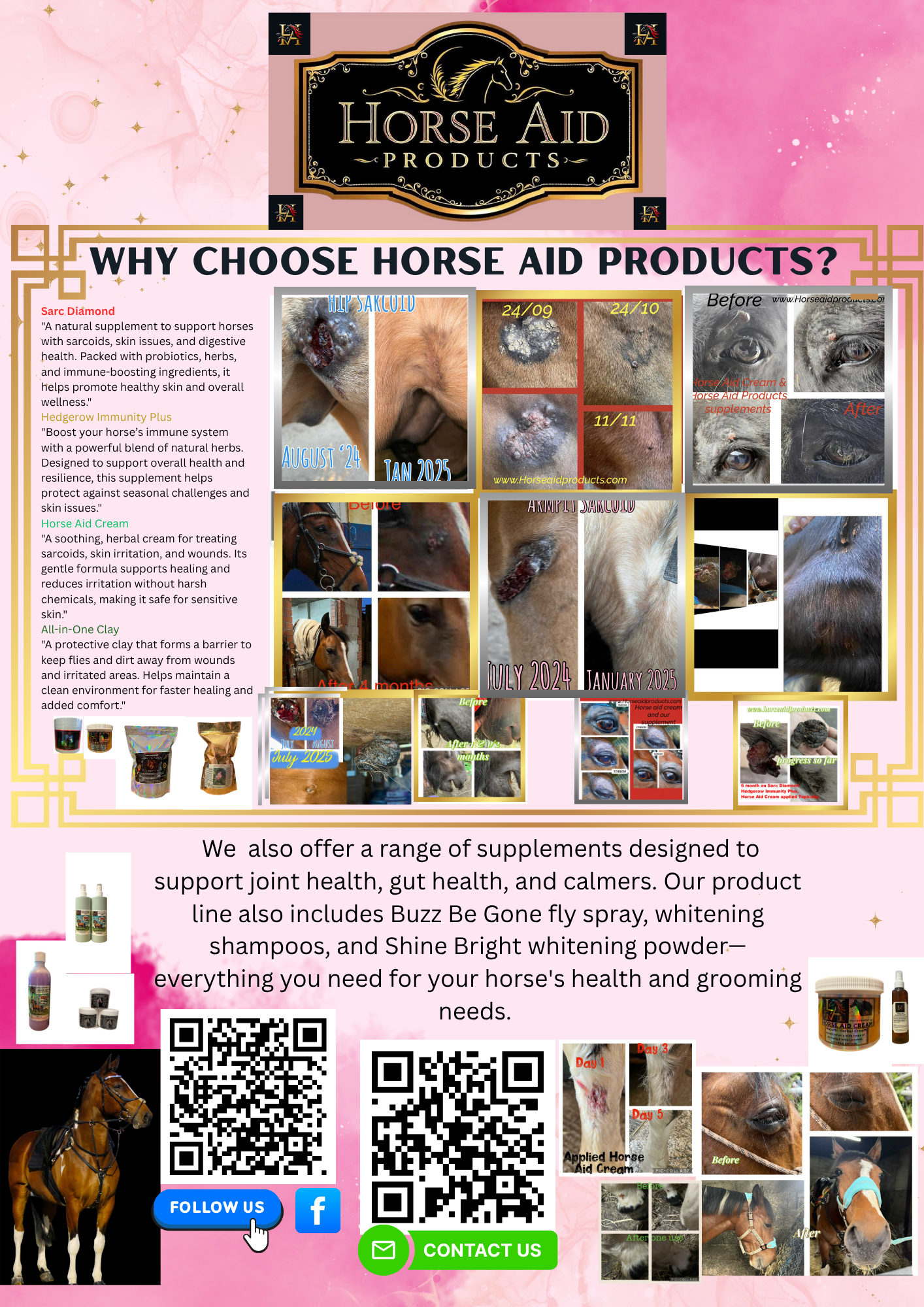
Horse Aid Cream is a topical solution that promotes skin regeneration, reduces the risk of infection, and aids in wound healing. It helps to soothe and protect the skin, supporting the natural healing process.
Sarc Diamond is an internal supplement that supports digestive health and immune function. The blend of prebiotics, probiotics, and omega-3 fatty acids helps strengthen the body from within, improving overall well-being and aiding recovery.
Hedgerow Immunity Plus is a blend of 14 herbs designed to enhance your horse’s immune system. Strong immunity is crucial for managing sarcoids and supporting overall health.
By boosting the immune system, these natural treatments offer a holistic approach that can work alongside conventional treatments to encourage healing and prevent recurrence. In fact, Pie, a horse on a maintenance plan of Sarc Diamond and Hedgerow Immunity Plus, has been sarcoid-free for two years. This success story demonstrates the power of combining these products for long-term immune support and sarcoid prevention.
You can see real customer results on our blog, Facebook, and Instagram pages, where we share success stories and testimonials from horse owners who have used Horse Aid Cream and Sarc Diamond to manage and heal their horses’ sarcoids.
5. What Is the “Iceberg Effect”?
The “Iceberg Effect” refers to the phenomenon where the visible part of a sarcoid is just a small portion of the problem, with the majority of the tumor lying beneath the surface. This means that even if the external growth appears to shrink or fall off, the root cause might still be present. If the tumor’s base or underlying tissue is not fully addressed, there’s a significant risk of recurrence.
This is where Horse Aid Cream, Sarc Diamond, and Hedgerow Immunity Plus can play a key role. While conventional treatments may focus on the external growth, natural remedies help support the body’s immune system from the inside out, addressing both the visible and hidden components of the sarcoid. By boosting the immune system, these products help to prevent regrowth and support long-term healing.
6. What Role Does Diet Play in Treating Sarcoids?
A balanced diet that supports immune health is essential for managing sarcoids. Horses with strong immune systems are better equipped to handle infections, support tissue repair, and manage sarcoids more effectively. Sarc Diamond improves gut health, which in turn supports immune function and skin health, while Hedgerow Immunity Plus offers a blend of vitamins and minerals that fortify the immune system.
7. Can Sarcoids Go Away on Their Own?
While small, less aggressive sarcoids may regress on their own, this is not always the case. Many sarcoids persist or even grow larger over time, making treatment important to prevent complications. Using Horse Aid Cream for topical support and Sarc Diamond for overall health can aid in encouraging healing and preventing further growth.
8. Are There Any Side Effects to Natural Treatments?
Natural treatments like Horse Aid Cream, Sarc Diamond, and Hedgerow Immunity Plus are generally safe and gentle, as they contain high-quality herbal ingredients. However, it is always advisable to consult with your veterinarian before starting any new treatments, particularly if your horse has other health conditions or is on medication.
9. How Long Will It Take for My Horse to Heal from a Sarcoid?
Healing time can vary depending on the type and size of the sarcoid, as well as the treatment method used. Some horses may see improvement within weeks, while others may take several months. Patience is important, especially with natural remedies. Consistent use of Horse Aid Cream, along with Sarc Diamond and Hedgerow Immunity Plus, can significantly aid the healing process.
10. Can Sarcoids Return After Treatment?
While it’s possible for sarcoids to recur, many horses do not experience regrowth once treated with Horse Aid Cream, Sarc Diamond, and Hedgerow Immunity Plus. Continued use of these products helps maintain immune function, reducing the likelihood of recurrence.
11. Are Equine Sarcoids Contagious?
Equine sarcoids are not contagious in the same way as bacterial or viral infections. However, since bovine papillomavirus (BPV) may play a role in their development, flies or other vectors could contribute to their spread. Maintaining proper hygiene and minimizing insect exposure can help reduce transmission.
12. Can Sarcoids Affect My Horse’s Performance?
In most cases, sarcoids do not affect performance. However, if a sarcoid is located in a spot where tack may cause irritation, such as under the saddle or girth, it could impact comfort and performance. Larger or ulcerated sarcoids may also cause discomfort, making proper treatment essential.
13. Is There a Genetic Predisposition to Sarcoids?
Though no specific genetic markers have been definitively linked to sarcoid susceptibility, some breeds may be more prone to developing them. If your horse has a history of sarcoids, it is important to monitor for any new growths and take proactive steps to support their immune health.
14. How Can I Contact You for Inquiries or Support?
We are available on Facebook and Instagram via our Horse Aid Cream and Horse Aid Products pages. You can also contact us through our website at www.HorseAidProducts.com, via email at HorseAidCream@outlook.com, or through WhatsApp at 07976922291.
Conclusion
Equine sarcoids can be a challenging condition, but with the right knowledge and support, they can be managed effectively. By utilizing natural remedies like Horse Aid Cream, Sarc Diamond, and Hedgerow Immunity Plus, you can help your horse heal more naturally and support their overall well-being. Always consult with your vet to develop a comprehensive treatment plan that best suits your horse’s needs.
For more information or to discuss your horse’s specific case, feel free to reach out to us at any time!